 English
 Português
 Español
 Français
 Deutsch

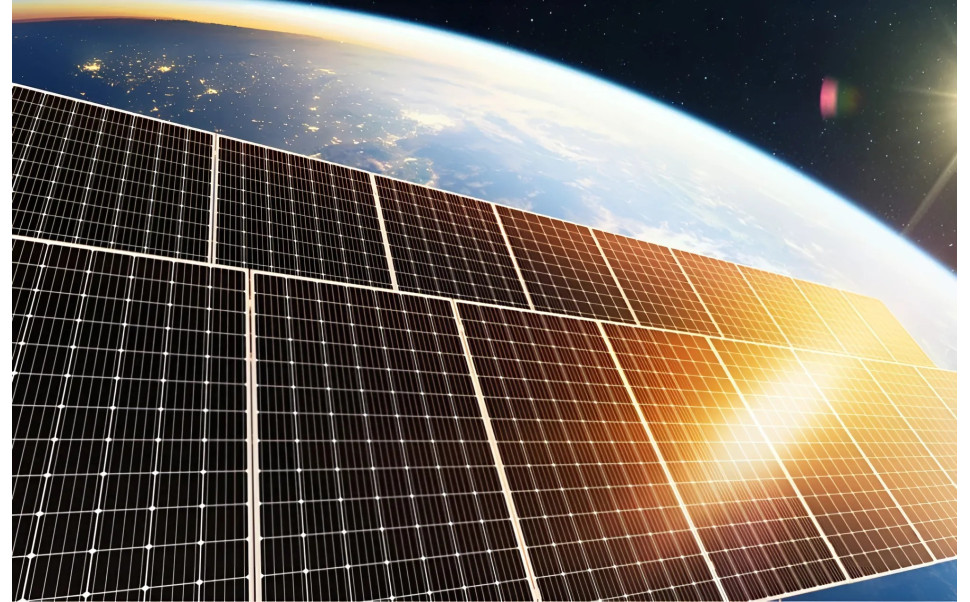
Space Ambition: China Plans Revolutionary Solar Station
A Project that Challenges the Imagination
China is planning a solar station in space! Yes, you read that right. We're talking about a giant solar panel, 1 kilometer wide, orbiting Earth at an altitude of 36,000 km. This ambitious project, dubbed the "Manhattan Project of energy," promises to revolutionize how we produce and consume electricity.
How the Space Solar Station Works
The idea is simple, but the execution is complex. The Chinese space solar station, positioned at an altitude of 36,000 km, will capture sunlight continuously, free from atmospheric interference and day-night cycles. With an efficiency estimated to be up to 10 times higher than terrestrial panels, it will convert solar energy into microwaves or laser, wirelessly transmitting it to receiving stations on Earth. A precise targeting system will ensure safe transmission of energy, which will then be converted into usable electricity. When fully operational in 2050, this orbital station is expected to generate energy equivalent to a nuclear power plant, with a projected capacity of 1 gigawatt, thus offering an innovative and sustainable solution for growing global energy needs.
Challenges and Perspectives of the Project
China's ambitious space solar energy project faces several significant technical and geopolitical challenges:
- Energy transmission: The choice between microwaves or laser to transmit energy to Earth is not yet defined, with each option presenting advantages and disadvantages.
- Massive infrastructure: The system would require antennas several kilometers long both in space and on Earth, raising concerns about stability and interference.
- Health impact: There are doubts about the possible negative effects of energy transmission on human health, potentially requiring exclusion zones around receiving stations.
- Technical challenges: The construction and maintenance of such a large structure in space present significant obstacles, including protection against space debris.
- Geopolitical tensions: The implementation of such space infrastructure may generate concerns among countries without similar technological capabilities.
Despite these challenges, China remains committed to the project, aiming for a capacity of 10 MW by 2035 and 2 GW by 2050. The success of this endeavor could revolutionize clean and sustainable energy production on a global scale.
Your Solar Solution: Terrestrial Alternative
Portable Solar Panels - The Revolution Within Your Reach
While we wait for this technological marvel of the future, how about considering a more... terrestrial solution? Let me introduce you to our Portable and Foldable Solar Panels!
→ https://sat25.com/en/store/energia-solar/paneles-solares/
Practical Advantages
1. You don't need to wait until 2050 to start harnessing solar energy.
2. They are lightweight, portable, and you can take them anywhere.
3. There's no risk of collision with space debris!
Conclusion: The Future of Solar Energy Is Here
While Chinese scientists work to harness the sun in space, you can start your own energy revolution right here, in your backyard or on your next outdoor adventure. After all, why wait for the future when you can start enjoying solar energy today?
Discover our portable solar solutions and be part of this energy revolution!
→ https://sat25.com/en/store/energia-solar/paneles-solares/
---------------------------------------------------------------------------------------------------------------------------